
A shared story.
Created together.
Tabletop roleplaying is a game where a small group of players creates a story together. Each player controls a character. A facilitator describes the world around them, introduces challenges and asks a very simple question:
What do you want to do?
From there, the possibilities are almost endless.
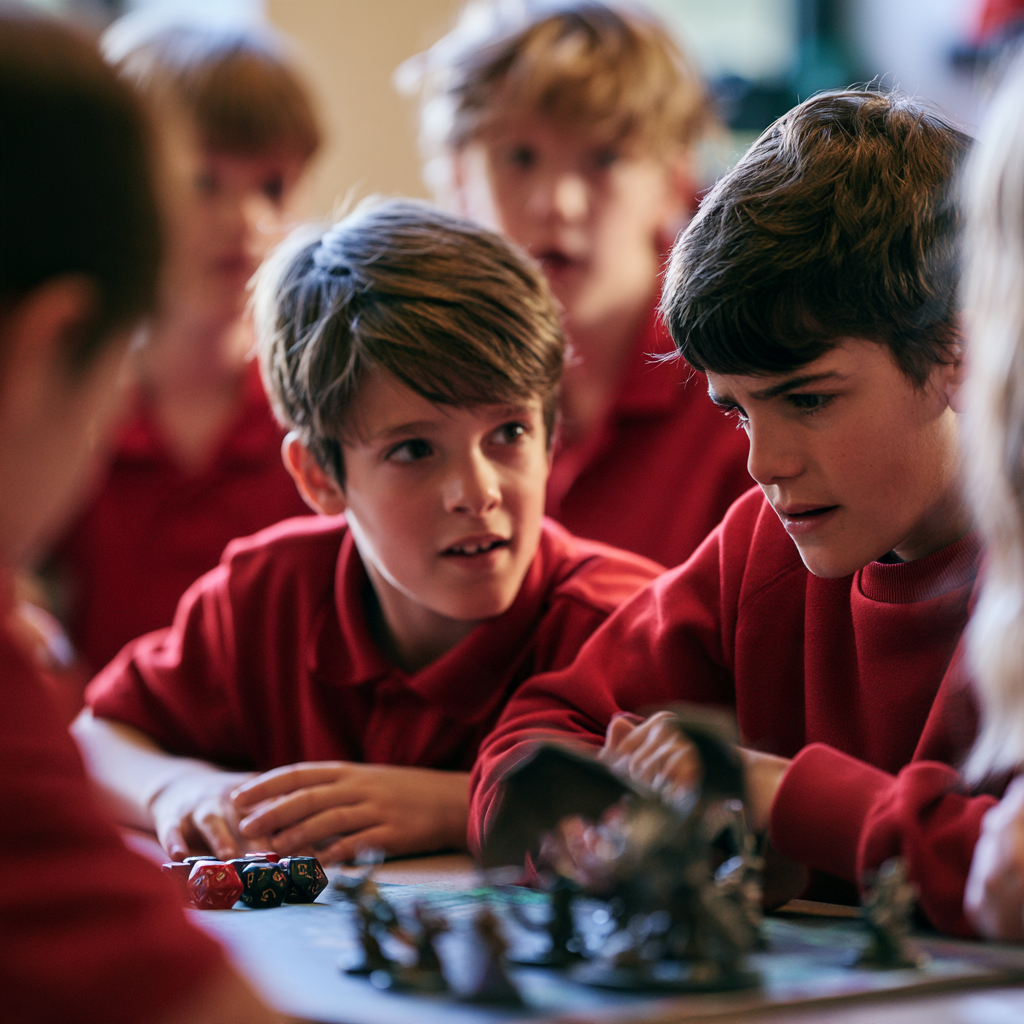
Here’s the idea
Imagine the group is exploring an old castle.
The facilitator tells them:
“At the end of the corridor is a heavy wooden door. It's locked. You can hear something moving on the other side.”
Now the players have to decide what to do.
Pick the lock? Knock on the door? Listen more closely? Look for another way around Set a trap? Walk away completely?
There isn't a list of choices to pick from. The players can suggest almost anything they can imagine. They discuss their ideas, make a decision and discover what happens next.
That's tabletop roleplaying.
More than a game
Around a table, players create characters, explore imaginary worlds and decide together what happens next. Along the way, they're imagining, communicating, solving problems, making decisions and working as a group. And, importantly, having a great time doing it.
Gather
Players sit down around a table with their facilitator and get ready to play.
Everyone has their own character, but they're part of the same adventuring group.
Immerse
The facilitator sets the scene.
Where are you? What's happening? Who is there? What's the problem?
It might be a mysterious disappearance, an unexplored cave, or something nobody at the table was expecting.
Decide
The players decide what their characters do.
They ask questions, share ideas, investigate, negotiate, make plans and solve problems together.
There is rarely one "correct" solution.
Roll
When the outcome isn't certain, the dice help decide what happens.
A high roll might mean the plan works brilliantly. A low roll might create an entirely new problem.
Either way, the story keeps moving.
Discover
The facilitator responds to the players' choices and describes what happens next.
One decision leads to another, and over several sessions the group creates an adventure that couldn't have happened without them.
Register now to secure your child a seat at the table!
Our after-school tabletop roleplaying sessions are limited in size. We want to make sure that every child attending gets to enjoy the full experience. Register your child now to make sure they get in on the fun.
BELONGING
CONFIDENCE
PROBLEM-SOLVING
COLLABORATION
CREATIVITY
BELONGING CONFIDENCE PROBLEM-SOLVING COLLABORATION CREATIVITY
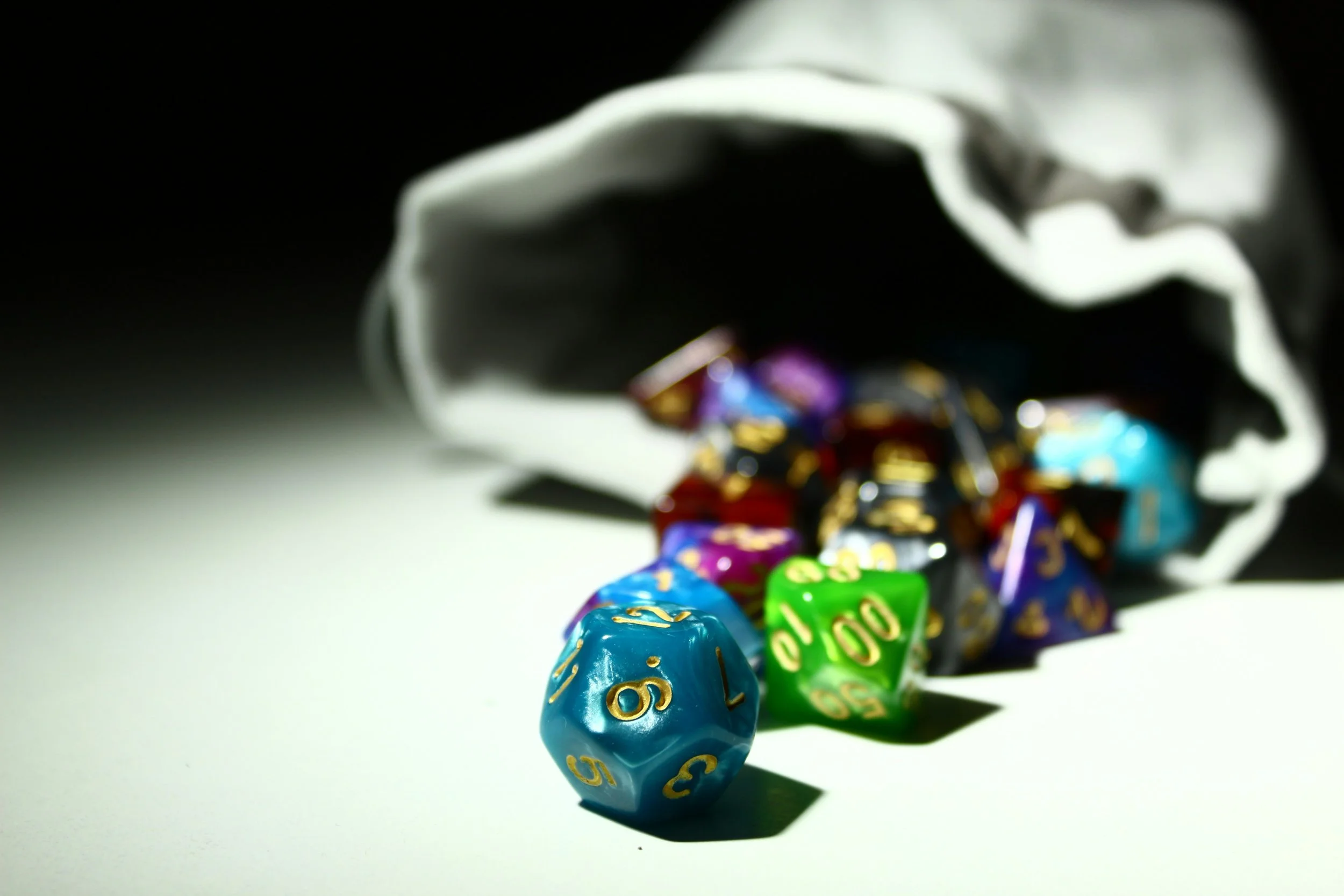
What’s with all
the dice?
Dice add certainty. And impartiality.
If a player wants their character to do something straightforward like open an unlocked door, walk across a room or talk to another character, they can just do it.
But what if they want to leap across a broken bridge? Sneak past a sleeping giant? Convince a guard to let them through?
That's when the dice come out. The roll helps determine whether the character succeeds.
Each character has different abilities (recorded on their character sheet). Those abilities determine what number is required for that character’s action to succeed.
For example, if an orc with great strength wants to lift a rock, they may need an 11 or higher to succeed. But if a small halfling with great charm, but little strength, wants to move the same rock, they may need an 18 or higher. In this instance, it may be better for the halfling to use their charm to convince the orc to lift the rock for them.
And failing a roll doesn't mean losing the game. Sometimes the best stories begin when a plan doesn't work.
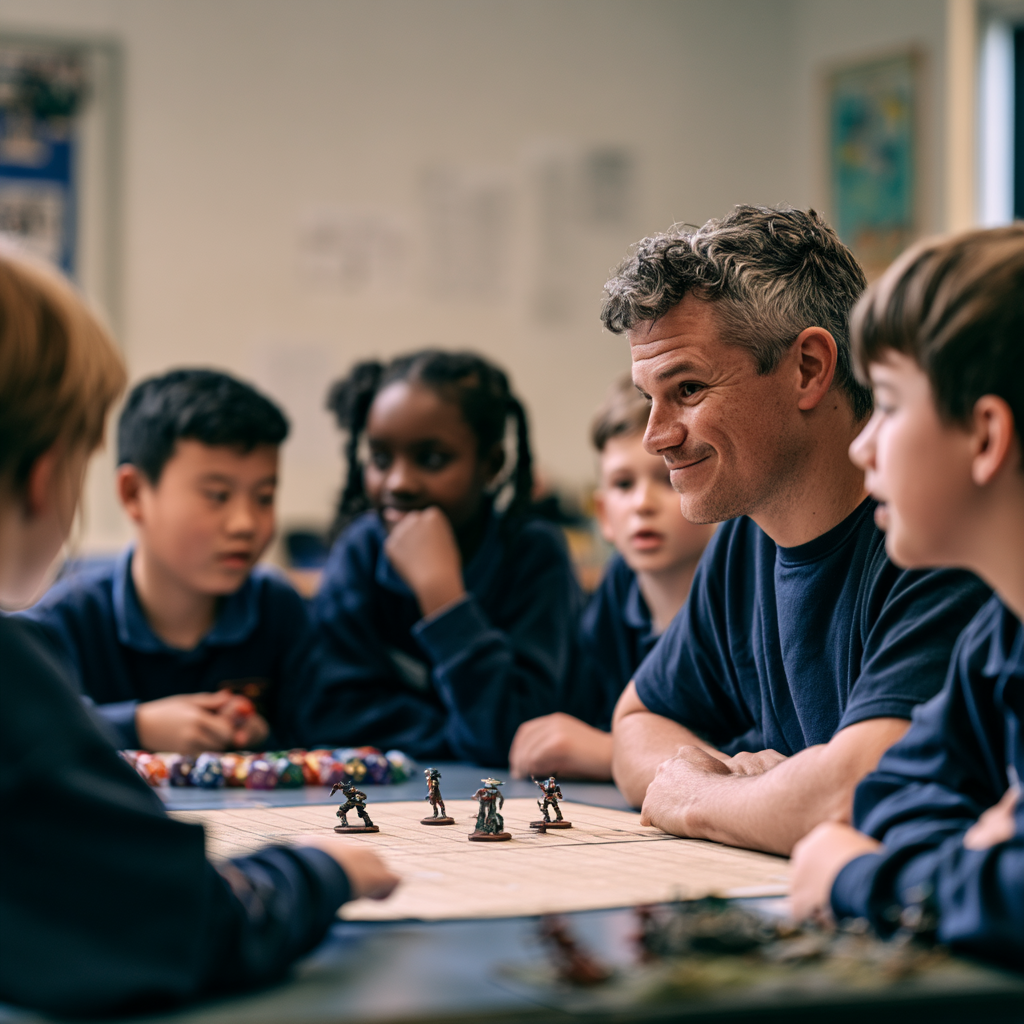
Who runs the game?
Meet the Dungeon Master.
The person running a game of Dungeons & Dragons is traditionally called the Dungeon Master or Game Master, regularly abbreviated to DM or GM.
At KINHALL, that's our facilitator. Think of them as part storyteller, part referee and part guide.
They describe the world, roleplay the other people and creatures the players encounter (these are called non-playable characters, or NPCs), explain the rules and respond to the group's decisions.
But they don't decide how the story unfolds. The players do that.
No right answers.
No single winner.
Most games tell you what you're trying to achieve.
Tabletop roleplaying is a little different.
There might be a mystery to solve, somewhere to explore, someone to rescue or a problem facing the group. But how the players approach it is up to them.
They might succeed. They might fail spectacularly. They might completely ignore the problem and decide to investigate something else. That's part of the fun.
The goal isn't to beat the other people at the table. It's to see what kind of story you can create together.
And what happens next?
The story continues.
Characters remember what happened. Decisions have consequences. Mysteries remain unsolved. New problems appear.
The group picks up where they left off and discovers what happens next.
Over the course of a KINHALL program, the players create an adventure that belongs to their group.
No two tables will ever tell quite the same story.
Register now to secure your child a seat at the table!
Our after-school tabletop roleplaying sessions are limited in size. We want to make sure that every child attending gets to enjoy the full experience. Register your child now to make sure they get in on the fun.
Not quite ready to join the story?
KINHALL programs are designed for beginners. We provide everything needed to get started.
Questions about ages, experience, equipment, group sizes or anything else?